What Gaming Viewers Actually Wanted This Week
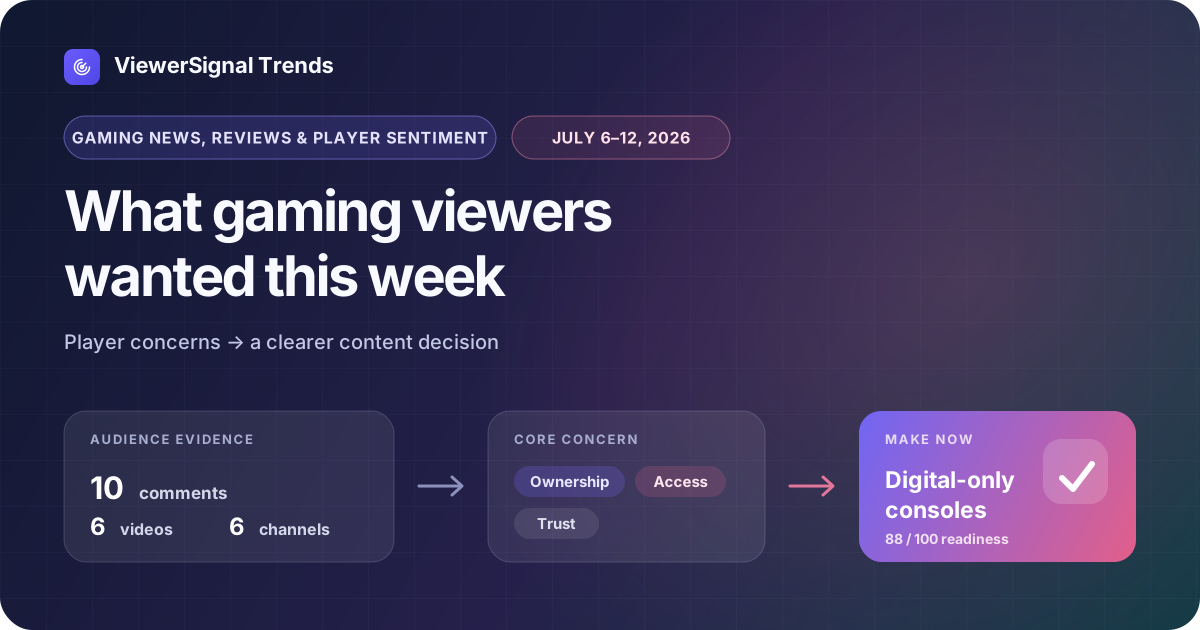
This week's gaming comments were not mainly asking which new game is worth buying. They were arguing about what ownership still means when consoles, media, and monetization keep moving outside the player's control.
- Published:
- Coverage:
- July 6–12, 2026
This week in 30 seconds
- Digital-only console concerns produced the clearest immediate opportunity, with ownership and trust at the center of the reaction.
- Microtransactions were a second Make Now signal, framed as a game-quality problem rather than only a pricing complaint.
- Physical media and affordability need sharper angles, while the large AAA-development cluster still lacks one clear creator job.
Top content opportunity
Digital-only consoles turned into an ownership argument
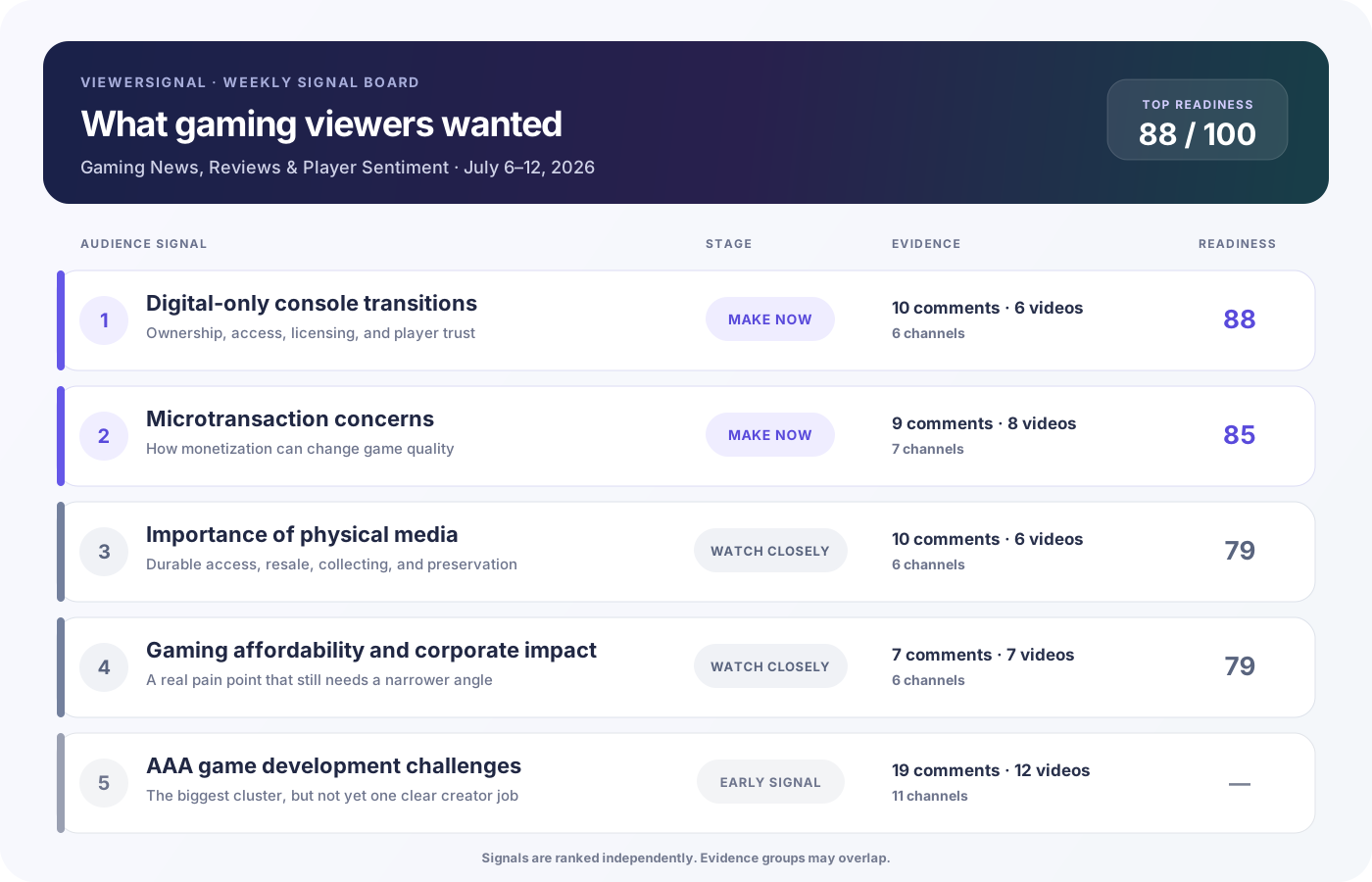
Ten related comments across six videos and six channels focused on the move toward digital-only consoles, giving this signal an 88/100 readiness score. Viewers were not treating a missing disc drive as a minor hardware choice. They were talking about ownership, access, loyalty, and whether a platform can change the terms after people have spent years building physical libraries.
Some commenters described the disc option as part of a social contract. Others said they would skip a future console, move their spending elsewhere, or stop buying from a platform if physical games disappeared. The language is emotional, but the creator opportunity is practical: explain what players gain and lose when a console becomes fully digital.
The category-level summary points in the same direction, identifying digital ownership and licensing as the strongest umbrella concern. A strong video should go beyond predicting one console feature and examine permanence, resale, account access, licensing, and what happens when a storefront or platform policy changes.
Video angles supported by this signal
- The social contract broken by digital-only consoles
- Why physical discs still matter
- How digital-only consoles affect gamers
Second Make Now signal
Players connect microtransactions to worse game design
Microtransaction concerns appeared in nine related comments across eight videos and seven channels, with an 85/100 readiness score. That spread makes this more than a reaction to one publisher or one release.
The useful angle is not another list of expensive stores or unpopular purchases. The report frames the viewer problem as the effect of microtransactions on game quality, especially in single-player games. Players want someone to examine how monetization can influence progression, repetition, balance, and the shape of the game itself.
That gives creators a cleaner promise: connect the business model to the player experience, then show which monetization choices feel optional and which ones begin to distort the design.
Video angles supported by this signal
- Top microtransaction pitfalls in single-player games
- How microtransactions harm game quality
Watch closely
Physical media matters for reasons beyond nostalgia
The case for physical media appeared in ten related comments across six videos and six channels, reaching 79/100 readiness. This evidence is closely related to the digital-only console signal, so the totals should not be combined or treated as twenty unique comments.
What makes this a potentially separate video is the reason viewers give for wanting discs: durable access, resale, collecting, lending, cultural preservation, and the ability to keep a game without depending entirely on an account or storefront. One commenter compared games with physical options for films and music; another said price mattered less than retaining a physical choice.
The signal is broad and well supported, but less urgent than the digital-only transition itself. It becomes stronger when framed as an ownership explainer rather than a general defense of collecting.
Video angles supported by this signal
- Why physical games still matter
- The cultural value of game discs
Audience pain
Gaming affordability is real, but the story is still too broad
Seven related comments across seven videos and six channels connected gaming costs with subscriptions, hardware access, layoffs, publisher strategy, and anticipated monetization. The signal scored 79/100, but the report correctly keeps it in Watch Closely because the creator action is not concrete enough yet.
The comments do not point to one simple affordability problem. Some viewers describe gaming as an increasingly expensive hobby; others focus on subscriptions, high game prices, corporate decisions, or the expectation that future releases will add more paid systems.
A useful next step would be a specific cost breakdown or comparison. Until the evidence settles around one job—hardware, subscriptions, full game cost, or monetization—an all-purpose 'gaming is too expensive' video risks becoming too vague.
Video angles supported by this signal
- What gaming actually costs in 2026
- When subscriptions stop making games affordable
- How corporate strategy changes what players pay
Large early signal
AAA development drew the biggest cluster, but not the clearest video
The largest cluster in the report contained nineteen related comments across twelve videos and eleven channels around AAA development challenges. Despite that reach, it remains an early signal rather than a Make Now recommendation. High volume alone does not make a useful upload when the comments point in several directions.
Viewers discussed unclear project direction, cancelled games, long waits between releases, troubled launches, and the value of developers taking responsibility and fixing problems. Those reactions share a concern about how big games get made, but not yet one sharply defined question.
A narrower trust thread also appeared around Early Access: nine comments across two videos and two channels raised unfinished products, paying to test games, abandonment risk, and unclear timelines. That is worth monitoring, but the two-channel spread is still limited. Both themes become more actionable when viewers repeatedly ask for the same explanation, comparison, or checklist.
Video angles supported by this signal
- Why AAA games take so long to make
- What players should expect before buying Early Access
Why this matters
The common thread this week is control. Digital-only hardware, physical ownership, microtransactions, subscriptions, and unfinished games all change how much control players keep after they pay. Gaming creators can make stronger videos by explaining those tradeoffs with evidence instead of treating every frustrated comment as generic negativity.