What Real Estate Viewers Actually Wanted This Week
This week's real estate comments were not simply trying to call the top or bottom of the market. Viewers wanted practical ways to make expensive housing, uncertain mortgage payments, investor competition, and the ongoing cost of ownership feel more manageable.
- Published:
- Coverage:
- July 13–19, 2026
This week in 30 seconds
- The clearest immediate opportunity is a buyer-focused guide to inflated prices, investor pressure, and what can still be negotiated.
- Mortgage questions are really payment-planning questions, especially for first-time buyers trying to compare rates, points, and monthly costs.
- Investment guidance has broad reach but needs a narrower job, while property taxes are emerging as a serious ownership trust blocker.
Top content opportunity
Buyers want a playbook for a market they no longer trust
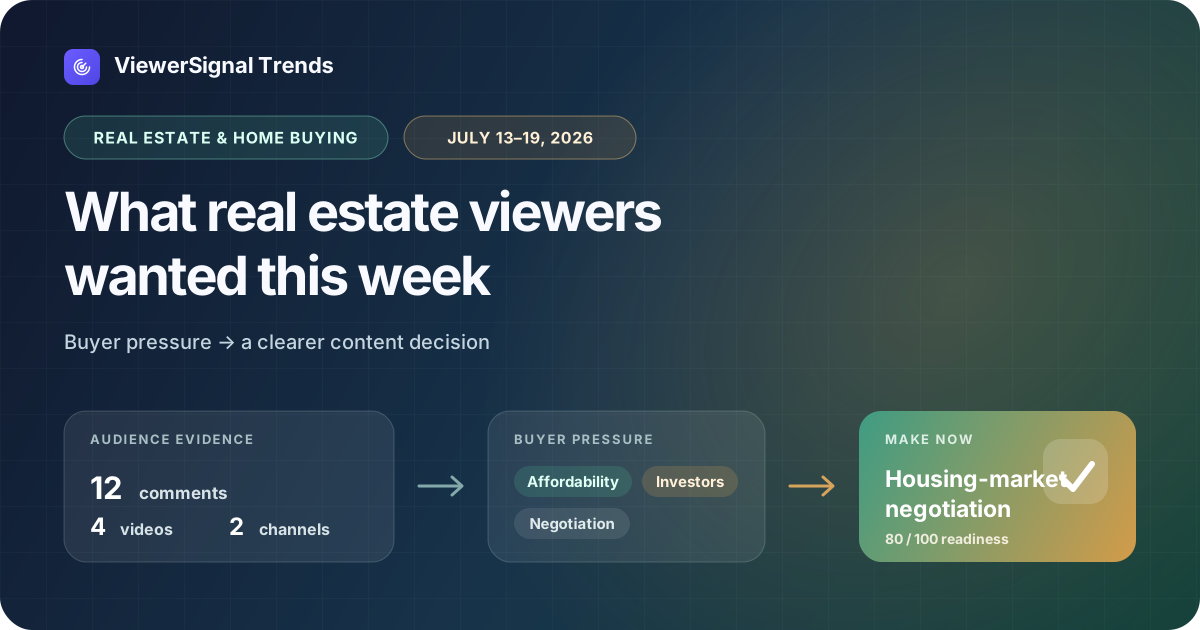
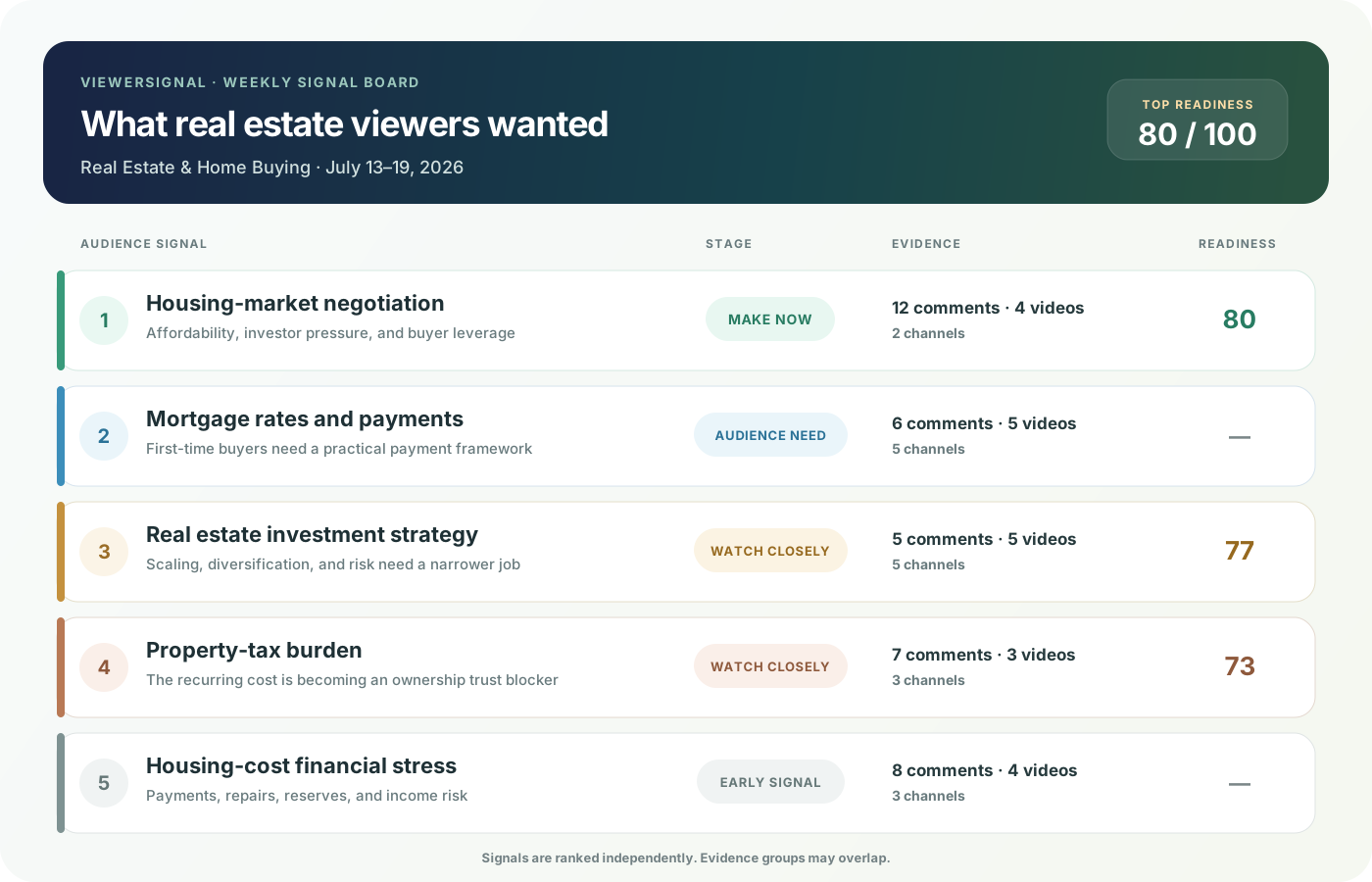
Twelve related comments across four videos and two channels focused on housing-market dynamics and negotiation, giving this Make Now signal an 80/100 readiness score. The viewers were not asking for another broad prediction about whether prices will rise or fall. They were describing a market that feels disconnected from household income and increasingly shaped by large investors.
One homeowner said a meaningful income increase still was not enough to afford one additional bedroom. Another described spending years renting after a relocation while cash sat on the sidelines, then realizing how strongly investor activity had affected the homes available to ordinary buyers.
That creates a practical creator job: show buyers what they can evaluate and negotiate even when the headline price feels unreasonable. The strongest version would separate local supply, seller leverage, comparable sales, financing terms, inspection findings, and investor activity instead of treating every expensive market as the same problem.
The evidence is concentrated in two channels, so the video should be presented as a buyer decision framework rather than a universal verdict on the entire housing market.
Video angles supported by this signal
- What home buyers can still negotiate in a high-price market
- How investor activity changes the price of your next home
- A buyer's checklist for spotting an overvalued property
Strong audience need
Mortgage questions are really payment-planning questions
Six related comments across five videos and five channels asked how to understand or manage mortgage rates and payments. That cross-channel spread makes the need broader than one rate-update video. Viewers are trying to decide whether a quoted rate is competitive, what APR and discount points actually change, when to lock, and how to reduce the monthly payment before closing.
The source report's category-level read scored this broader opportunity at 85/100 and identified first-time homebuyers as the clearest audience. The emotional driver is not fascination with rate mechanics; it is anxiety about making a long financial commitment without knowing whether the numbers are reasonable.
A strong video should therefore move from explanation to decision support. Show a worked example, distinguish rate from APR, explain the break-even point on points, and demonstrate how taxes, insurance, down payment, and loan structure change the payment.
Video angles supported by this signal
- How to tell whether your mortgage quote is actually good
- Mortgage rate, APR, and points explained with one real example
- Five ways to lower a monthly house payment before closing
Recurring watch
Investment demand has reach, but it splits into different jobs
The report surfaced two related but independently ranked investment signals. Real estate investment strategy appeared in five comments across five videos and five channels at 77/100 readiness. A broader investment and financial-planning cluster appeared in twelve comments across eight videos and five channels at 75/100. Because these groups may overlap, their totals should not be added together.
The first group is closer to the category's core: viewers discussed scaling rental portfolios, build-to-rent strategies, diversification, and managing risk. The second reaches into saving, retirement planning, hard assets, and the difference between building wealth slowly and chasing whichever asset is moving now.
Both have demand, but neither points to one definitive upload yet. The creator opportunity becomes stronger when the promise is narrowed to a stage or decision: starting later in life, adding the next rental, comparing property with another asset class, or deciding how much concentration risk is acceptable.
Video angles supported by this signal
- How to scale from one rental without taking reckless risk
- A late starter's realistic real estate investment plan
- Real estate versus other assets: what diversification actually means
Trust blocker
Property taxes are changing what ownership feels like
Seven related comments across three videos and three channels focused on property-tax burdens, reaching 73/100 readiness. The strongest comments did not describe taxes as a small line item. They questioned whether a paid-off home can feel fully owned when a rising annual obligation can still put that home at risk.
The language is emotional and sometimes political, but the useful creator response is educational. Viewers need a clear explanation of how assessments work, why bills can rise even without a move, which exemptions or caps may apply, and what appeal or relief processes exist in different jurisdictions.
This is less urgent than the negotiation signal, yet it matters because it can undermine otherwise sound home-buying advice. A total-cost video that ignores property-tax uncertainty may not answer the objection viewers are actually bringing to the decision.
Video angles supported by this signal
- Why a paid-off house can still become unaffordable
- Property-tax assessments, exemptions, and appeals explained
- The ownership cost most home-buying calculators underestimate
Early financial-pressure signal
Housing stress starts before a buyer reaches the offer
Eight related comments across four videos and three channels connected high mortgage payments, unaffordable prices, foreclosure repairs, and general financial stress. The pattern was promising, but not sharp enough to become a final Make Now recommendation.
The comments point to several different decisions: waiting for a price correction, deciding whether a discounted foreclosure is truly affordable, budgeting for repairs, and building enough resilience to survive a job or income shock. Those are connected by financial pressure, but they do not yet form one clean video promise.
For now, creators can use this evidence to make affordability content more realistic. Purchase price alone is not the viewer's full problem; the real question is whether the payment, repairs, reserves, and income risk still leave room to live.
Video angles supported by this signal
- The cash reserve a home buyer needs after closing
- When a discounted foreclosure is not actually affordable
- Stress-test your house payment before you make an offer
Why this matters
The common thread is predictability. Buyers, owners, and investors are trying to make long-term decisions while prices, payments, taxes, and market power feel difficult to forecast. Real estate creators can earn trust by replacing sweeping market calls with transparent calculations, decision frameworks, and the specific tradeoffs a viewer can still control.